

Achieving financial freedom is rarely the result of a single lucky break or an overnight windfall. For most self-made millionaires, building lasting wealth is a deliberate process rooted in discipline, smart allocation, and continuous personal growth. When you study the daily habits and long-term philosophies of individuals who have successfully built substantial fortunes, clear patterns emerge. These wealthy individuals do not rely on chance. Instead, they follow strict foundational rules that govern how they earn, save, and multiply their capital.
The path to financial independence begins with a fundamental shift in mindset. You must transition from viewing money as a resource meant for immediate consumption to seeing it as a productive asset designed to generate more value. If you want to transform your financial reality and build a secure future, you need a structured roadmap. This comprehensive guide explores seven essential wealth-building strategies used by millionaires worldwide, expanding on core principles to help you implement them effectively in your own life.
1. Eliminate Frivolous Spending and Adopt Conscious Consumption
One of the most profound differences between average earners and self-made millionaires lies in how they view everyday purchases. Wealthy individuals understand that every dollar spent today is a dollar that cannot work for them tomorrow. This does not mean living a life of total deprivation. Rather, it means practicing intentional consumption and eliminating impulse buys that drain your accounts without adding long-term value to your life.
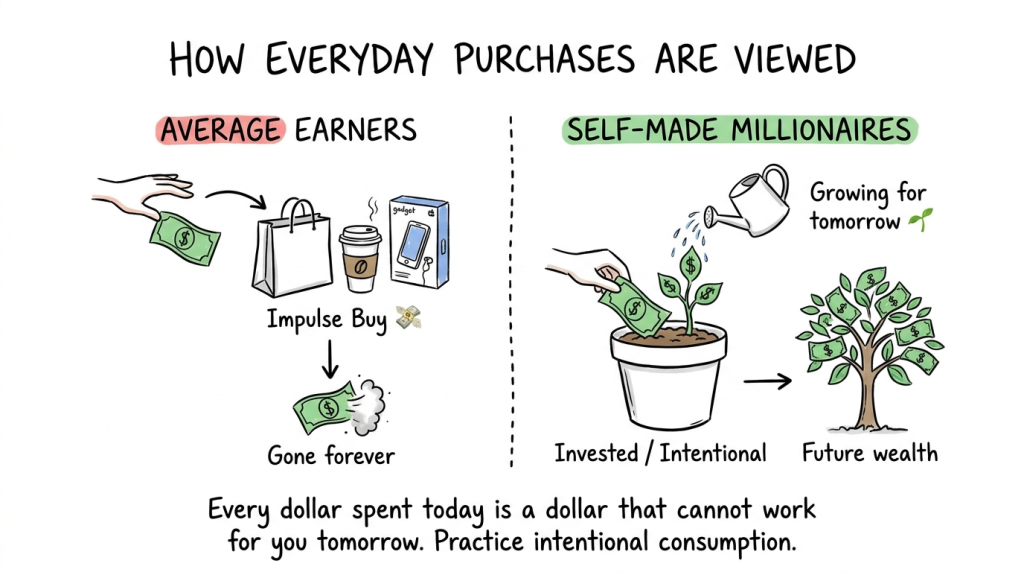
Consider a common scenario in modern consumer culture. Many young adults feel pressured to purchase the latest smartphone costing anywhere from several hundred to over a thousand dollars even when their current device functions perfectly. Over time, upgrading gadgets, dining out excessively, and buying designer clothing create lifestyle inflation. This phenomenon eats away at income before it ever has a chance to be invested.
To combat this, start by auditing your monthly expenses. Categorize every purchase into essential needs and discretionary wants. Ask yourself whether a purchase aligns with your long-term goals or if it is merely a temporary dopamine boost. By cutting out unnecessary subscription services, reducing dining out, and scaling back on status symbols, you instantly free up capital that can be redirected toward wealth generation.
2. Build a Aggressive Savings Habit
Saving money is the bedrock of financial security. Without a healthy savings rate, you lack the liquidity required to capitalize on unexpected opportunities or weather economic downturns. Ideally, financial experts and wealthy mentors recommend saving between ten and fifty percent of your net income depending on your earning capacity and lifestyle expenses.
The logic behind aggressive saving is straightforward. When you maintain a zero balance or live paycheck to paycheck, you miss out on advantageous market opportunities. Whether it is a discounted piece of real estate, a promising startup, or a market dip, lucrative ventures require ready capital. Furthermore, maintaining a substantial cash cushion aligns with the classic financial adage that money attracts money. Capital in a high-yield savings account or liquid fund provides the foundation for future investments.
To make saving effortless, automate the process. Set up an automatic transfer on payday that moves a designated percentage of your earnings directly into a separate savings or investment account. When the money is out of sight, you naturally adjust your lifestyle to live on what remains, removing the temptation to spend it.
3. Prioritize Real Estate and Homeownership
Real estate has historically remained one of the most reliable vehicles for building generational wealth. Unlike volatile paper assets, physical property provides tangible utility alongside potential appreciation. Investing in your own home or purchasing residential and commercial real estate allows you to build equity rather than paying rent to a landlord each month.
When you buy a primary residence, your monthly mortgage payment acts as a forced savings plan. A portion of every payment goes toward reducing the principal balance, slowly increasing your net worth over time. Additionally, real estate typically appreciates in value over the long term, hedging against inflation and outperforming many traditional savings instruments.
Beyond homeownership, property investment opens doors to passive income through rental yields. However, success in real estate requires thorough research, understanding local market dynamics, and calculating potential cash flow accurately. Always factor in maintenance costs, property taxes, and insurance when evaluating a real estate purchase to ensure it remains a profitable asset rather than a financial burden.
4. Protect Your Capital Through Risk Management
A common mistake among novice investors is chasing high-risk, high-reward schemes without understanding the underlying mechanics. Self-made millionaires know that protecting existing capital is just as important as generating new income. Wealth preservation requires investing with caution, seeking guarantees where possible, and minimizing exposure to catastrophic financial loss.

Before committing funds to any venture, conduct rigorous due diligence. Understand the worst-case scenario and ensure you have safety nets in place. Diversification is a primary tool for risk protection. By spreading your investments across different asset classes, industries, and geographic regions, you shield your portfolio from localized market downturns.
It is also vital to build an emergency fund covering three to six months of living expenses before entering the investment arena. This fund acts as a financial shield, ensuring you never have to liquidate your long-term investments prematurely during an unexpected crisis such as a job loss or medical emergency.
5. Partner With Experienced and Knowledgeable Mentors
Navigating the financial world alone can be slow and costly. One of the smartest moves an aspiring millionaire can make is surrounding themselves with individuals who have already achieved financial success. The best investment partners are those with a proven track record of generating wealth and navigating economic cycles.
Experienced mentors and partners offer invaluable guidance that books and theoretical courses cannot replicate. They can help you distinguish between investments that generate high nominal returns and those that offer genuine reliability. These two metrics are rarely the same. A high-yield venture often carries hidden risks, whereas a reliable, steady investment protects capital while delivering consistent growth.
Seek out networking events, industry conferences, and mentorship programs to connect with seasoned entrepreneurs and investors. Listen to their advice, study their past mistakes, and apply their proven frameworks to your own financial decisions.
6. Create Multiple Streams of Income and Practice Compound Reinvestment
Relying on a single paycheck is one of the riskiest financial positions you can maintain. Millionaires rarely depend on just one source of revenue. Instead, they build diversified income streams through businesses, investments, royalties, and side ventures.
Once your savings begin generating returns, the golden rule is to reinvest that capital rather than immediately spending it. This creates a powerful compounding effect where your money earns money, and those earnings generate even more income.
Many successful entrepreneurs follow strict allocation milestones. For example, some adopt a rule where they do not spend money on luxury items or major lifestyle upgrades until they have established at least five distinct streams of income. Once your primary wealth engines are running smoothly and self-funding, you can comfortably allocate a small percentage of profits toward personal rewards without derailing your financial progress.
7. Commit to Lifelong Learning and Skill Development
The ultimate driver of long-term wealth is your personal earning capacity. No matter how much you save or invest, your ability to generate income is your greatest financial asset. Therefore, continuous education and skill development are non-negotiable components of the millionaire mindset.
You must constantly learn how to increase your value in the marketplace. Whether through mastering high-income skills, studying advanced financial strategies, or understanding emerging industry trends, education should be an ongoing pursuit. Ideally, every educational investment you make should yield a measurable return by increasing your professional value or expanding your business capabilities.
Read books daily, attend workshops, take specialized courses, and remain curious about how the world works. When you invest in your own mind, you acquire knowledge that no market crash or economic downturn can ever take away from you.

Building wealth is not about quick fixes or luck. It is a disciplined journey that requires you to stop mindless spending, save aggressively, protect your capital, and invest wisely. By surrounding yourself with experienced mentors, building multiple income streams through continuous reinvestment, and committing to lifelong learning, you lay a solid foundation for lasting financial independence. Start applying these seven principles today, and take control of your financial destiny.
 Wilson J